Why Water Restoration Services in Olympia, WA Are Critical for Every Property Owner
Water damage does not wait for a convenient time. It strikes fast, spreads quietly, and costs a fortune if you ignore it even for a few hours. If you own a home or run a business in Olympia, WA, understanding how professional water restoration services work could be the difference between a quick recovery and a months-long rebuilding nightmare.
Olympia, WA sits in Thurston County, surrounded by dense Pacific Northwest forests and subject to heavy seasonal rainfall, rapid snowmelt, and aging residential infrastructure. These factors combine to create a higher-than-average risk of flooding, pipe failures, and moisture infiltration. Floodtek has worked alongside countless property owners in this region, and what we consistently find is that people underestimate how quickly standing water triggers secondary damage from warped flooring and collapsed drywall to full-scale mold colonization. This article walks you through everything you need to know about water restoration in Olympia, WA: what the process actually looks like, when you need it, and how to protect your property before the next storm rolls in.
Understanding Water Damage in the Olympia, WA Area
Most people picture water damage as a flooded basement or a burst pipe gushing across the kitchen floor. The reality is far more nuanced. In Olympia, water damage restoration professionals deal with a wide spectrum of incidents from slow, hidden leaks behind walls to catastrophic storm surges that push several inches of water through a ground floor in under an hour.
The Pacific Northwest’s wet season runs roughly from October through April, and Olympia, WA receives consistent rainfall throughout. Combine that with older housing stock many homes in the area were built in the 1980s and 1990s with plumbing systems now nearing end of life and you have a region where emergency water extraction calls spike every winter without fail.
The Three Categories Water Damage Restoration Professionals Work With
Industry professionals follow the IICRC S500 standard, which classifies water damage into three categories based on contamination level. Category 1 is clean water, a supply line break, an overflowing bathtub, or rainwater entering through a roof leak. Category 2, known as grey water, includes water from dishwashers, washing machines, or toilet overflow without solid waste. Category 3 is black water, the most hazardous type, covering sewage backup, floodwater from rivers or streams, and any water that has been sitting long enough to become biologically contaminated.
Why does this matter to you as a homeowner? Because the category determines the restoration protocol, the personal protective equipment technicians use on site, and how aggressively your belongings and building materials need to be treated or discarded. A Category 3 sewage cleanup, for example, requires full containment, antimicrobial treatment, and often the removal of porous materials that simply cannot be decontaminated. Treating it the same way you would a Category 1 clean-water event would be a serious mistake.
Common Causes of Property Water Damage in Olympia, WA
The most frequent calls for professional water restoration in Olympia, WA area involve burst pipes during cold snaps, basement flooding from storm surges overloading drainage systems, roof leaks after heavy wind-driven rain, appliance failures like washing machine hoses and water heater tank ruptures, and sewage backups caused by tree root infiltration in aging sewer lines. Storm damage repair and residential flood restoration together account for the majority of jobs in the area between November and March, when a series of atmospheric rivers can dump several inches of rain over just a few days.
What the Water Damage Restoration Process Actually Looks Like
A lot of homeowners have no idea what happens after a restoration crew shows up. They expect someone to arrive with a wet-vac, pull up the carpet, run some fans, and call it done. Professional water mitigation is far more systematic than that and skipping steps is exactly how properties end up with serious mold problems three weeks later.
Emergency Water Extraction and Initial Assessment
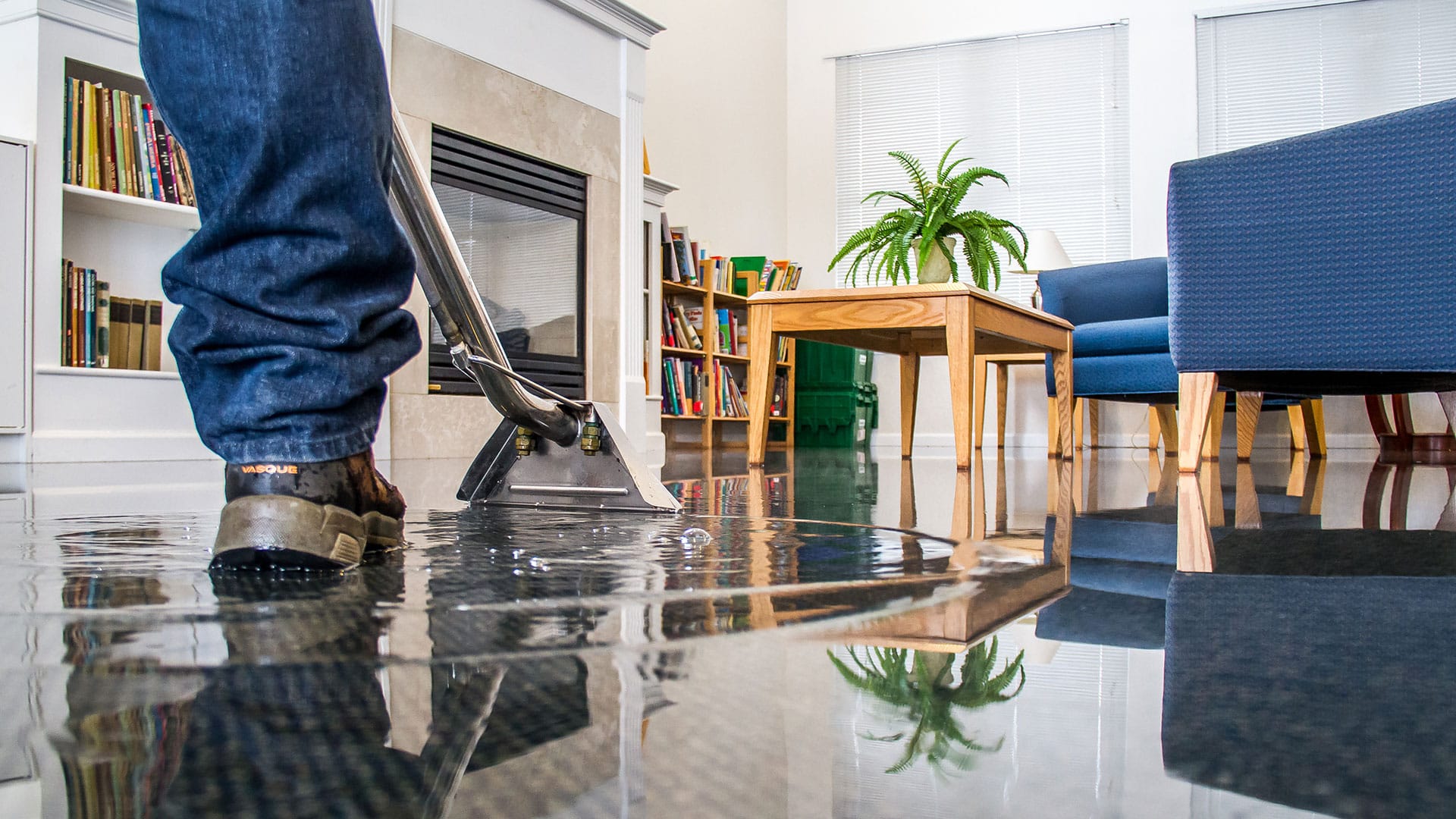
The first priority on any water damage job is stopping the source. That sounds obvious, but you would be surprised how many calls come in where the homeowner has not yet located the shutoff valve, or where a slow roof leak has been trickling behind a wall for weeks unnoticed. Once the source is controlled, technicians perform a full moisture detection sweep using thermal imaging cameras and calibrated moisture meters to map the true extent of the damage which is almost always larger than what is visible to the naked eye.
Emergency water extraction then begins using truck-mounted or portable extraction units capable of pulling hundreds of gallons per hour out of floors, carpets, and wall cavities. Speed here is everything. IICRC research shows that mold can begin to colonize wet building materials in as little as 24 to 48 hours under the right temperature and humidity conditions which describes a typical Pacific Northwest interior perfectly.
Structural Drying, Dehumidification, and Drying Equipment Services
Extraction removes bulk water, but it cannot remove the moisture that has wicked into wood framing, subfloors, drywall, and insulation. That is where structural drying comes in. Restoration technicians calculate the number and placement of industrial air movers and commercial-grade dehumidifiers needed to create a controlled drying environment essentially engineering the airflow inside the structure to push moisture out of materials and into the air, where the dehumidifiers capture and remove it.
Daily moisture readings track the drying progress. A properly executed structural drying job in a residential setting typically takes three to five days, though basement flooding with saturated concrete and framing can run longer. The drying equipment runs continuously day and night and the data is logged to document the drying timeline, which becomes essential for insurance claim assistance later.
Mold Remediation After Flooding — Why It Cannot Be an Afterthought
Mold remediation is one of the most misunderstood parts of water damage recovery. Many homeowners assume that once the visible water is gone, the mold risk is gone too. That is not true.Residential water damage restoration In Olympia, WA cool, humid climate, moisture trapped inside wall cavities or beneath flooring creates ideal conditions for mold growth even after the surface looks dry. EPA guidelines recommend that any material with visible mold covering more than ten square feet should be handled by a professional remediation contractor rather than a DIY approach.
Professional mold prevention after flooding involves containment to prevent spore spread to unaffected areas, HEPA air filtration, physical removal of contaminated materials, antimicrobial treatment of affected surfaces, and clearance testing before the containment comes down. Treating mold as a cosmetic problem painting over it, for instance does not eliminate it. It just delays the inevitable and can void your insurance coverage in the process.
Residential and Commercial Water Restoration in Olympia, WA
Water damage does not discriminate between homes and businesses, but the stakes are different. A homeowner dealing with basement water removal faces displacement, damaged possessions, and real emotional stress. A business owner facing commercial water damage faces all of that plus lost revenue, liability for customers or employees, and potential regulatory complications if the facility handles food, healthcare, or sensitive records.
Residential Water Restoration Olympia, WA — Protecting Your Biggest Investment
For residential properties in Olympia, WA, the most common scenarios restoration crews handle are basement flooding from stormwater or sump pump failure, burst pipe water cleanup in kitchens and bathrooms during winter cold snaps, wet carpet drying services after appliance failures, and leak damage restoration from roofing or plumbing issues that have gone undetected for extended periods. Home water damage repair requires a careful balance technicians need to work quickly and thoroughly while also respecting that this is someone’s living space.
What sets professional residential flood restoration apart from a DIY approach is not just equipment it is documentation. Every moisture reading, every photograph, every piece of removed material gets logged. That documentation becomes the foundation of your insurance claim and protects you if questions arise months later about whether the restoration was completed properly.
Commercial Water Mitigation — Speed Is a Business Necessity
Commercial water mitigation in Olympia, WA demands a faster and more complex response than most residential jobs. A retail store, restaurant, office building, or warehouse that closes for water damage loses revenue every single hour it stays shut. Commercial water damage services scale up accordingly with larger extraction equipment, more drying units deployed simultaneously, and often crews working in shifts around the clock to compress the drying timeline as much as possible.
There is also the matter of business interruption insurance, which most commercial policies carry. A detailed, professional restoration report with timestamps, moisture logs, and a clear scope of work is exactly what insurance adjusters need to process a claim. Insurance-approved restoration services from a certified contractor make that process significantly smoother and faster.
Specific Water Damage Scenarios Every Olympia, WA Property Owner Should Know
While every water damage job is unique, a few scenarios come up repeatedly in the Olympia, WA area. Knowing what to expect in each one helps you respond more effectively when it happens to you.
Basement Flooding and Water Removal in Olympia, WA
Basement flood cleanup is one of the most labor-intensive water restoration jobs. Water finds the lowest point in a structure, and in Olympia, WA’s clay-heavy soils, hydrostatic pressure during heavy rain events can push water through foundation walls and floor slabs even without a visible breach. Basement water removal starts with extraction, moves into structural drying with air movers and dehumidifiers staged throughout the space, and then requires a careful inspection of the foundation for crack sealing and waterproofing needs. Finished basements with drywall and carpet require the most extensive remediation because those materials absorb and retain moisture rapidly.
Burst Pipe Repair and Emergency Flood Repair
Burst pipe water cleanup is a true emergency. A single half-inch pipe can release hundreds of gallons before someone realizes what has happened. In Olympia, WA, burst pipes are most common during the brief but sharp cold snaps that drop temperatures below freezing for several consecutive nights pipes in uninsulated crawl spaces and exterior walls are the most vulnerable. Emergency flood repair after a burst pipe involves not just water extraction and drying but also coordination with a plumber for the pipe repair itself, and then a full moisture assessment of every adjacent wall, floor, and ceiling cavity that water may have entered.
Sewage Cleanup and Disaster Recovery Services
Sewage water cleanup is the most hazardous water damage scenario and requires immediate professional response. Raw sewage contains bacteria, viruses, and parasites that pose serious health risks. This is not a job for protective gloves and a mop. Disaster recovery services for sewage events in Olympia, WA involve full personal protective equipment for technicians, containment of the affected area, removal and disposal of all contaminated porous materials, disinfection and antimicrobial treatment of hard surfaces, and air quality testing upon completion. If your home or business has experienced a sewage backup, vacate the affected area and call a professional immediately.
Insurance Claim Assistance and What to Expect from Your Policy
One of the most stressful parts of water damage for homeowners and business owners is dealing with the insurance process. Most standard homeowner policies cover sudden and accidental water damage a burst pipe, an appliance failure, or storm-driven rain entering through a damaged roof but they typically exclude gradual damage from long-term leaks and flooding from external water sources, which requires separate flood insurance.
Working with a water restoration company that provides full documentation and understands the insurance claim process makes an enormous difference. Floodtek works directly with adjusters to provide the moisture logs, photo documentation, drying reports, and itemized scopes of work that insurance companies require. We also help property owners understand what their policy covers before work begins, so there are no surprises when the claim is filed. Disaster restoration companies that offer insurance-approved restoration services and understand how to communicate with adjusters help you recover faster and with less financial uncertainty.
How to Choose the Right Water Restoration Company in Olympia, WA
Not every contractor who shows up after a water loss is equipped to handle the job properly. Here is what to look for when you are evaluating local water restoration experts in Olympia, WA.
IICRC certification is the industry benchmark. The Institute of Inspection Cleaning and Restoration Certification sets the technical standards that professional restoration companies follow to look for technicians certified in Water Damage Restoration (WRT) and Applied Structural Drying (ASD). A 24/7 water restoration company in Olympia, WA should be available around the clock because water damage does not respect business hours. Response time matters enormously the faster mitigation begins, the lower the total damage and the faster the recovery.
Ask about their documentation practices. A professional water damage repair company will provide detailed daily drying logs, moisture readings, and photographic documentation throughout the project. Ask whether they have experience working with your insurance carrier. And check that they carry general liability insurance and workers’ compensation. You do not want liability exposure if something goes wrong on your property during the job.
Conclusion
Water damage in Olympia, WA moves fast, and so does the secondary damage that follows. From the moment water enters your property, the clock is running on mold growth, structural degradation, and escalating repair costs. The right response, fast emergency water extraction, thorough structural drying, professional mold remediation, and meticulous documentation for insurance is what separates a manageable recovery from a drawn-out disaster.
Floodtek provides 24-hour water damage repair and full-spectrum water restoration services in Olympia, WA and the surrounding Thurston County area. Whether you are dealing with a flooded basement, a burst pipe, storm damage, or a sewage backup, our certified technicians respond fast, work thoroughly, and document everything. Do not wait to see if the damage dries on its own. Call us the moment water becomes a problem.
Frequently Asked Questions
Why is water restoration more urgent in Olympia, WA than in drier climates?
Olympia, WA’s cool, humid Pacific Northwest climate means indoor moisture levels are already elevated. Wet building materials in this environment can develop mold in as little as 24 to 48 hours, making fast professional response far more critical than in dry regions.
Why does basement flood cleanup take longer than surface-level water damage?
Concrete and masonry absorb and release moisture slowly, and below-grade spaces have limited natural airflow. Basement water removal requires more drying equipment running for a longer period, and often involves sealing foundation cracks to prevent re-infiltration during the drying process.
Why is sewage cleanup a health emergency rather than just a cleaning job?
Sewage water is Category 3 black water containing dangerous pathogens including E. coli, hepatitis A, and various parasites. Contact with untreated sewage without proper protective equipment puts you at real risk of serious illness. Professional sewage cleanup includes not just cleaning but disinfection, air quality testing, and safe disposal of contaminated materials.
Why do commercial water restoration jobs require a different approach than residential ones?
Commercial properties involve larger square footage, more complex building systems, potential regulatory compliance issues, and significant business interruption costs. Commercial water mitigation requires faster mobilization, more equipment, and detailed documentation that supports both insurance claims and business interruption coverage.
Why is mold remediation sometimes needed even after a small water event?
Even a small leak can saturate wall insulation or subfloor materials that trap moisture for weeks. In Olympia, WA’s climate, that hidden moisture is enough to sustain mold growth. A professional assessment after any water event is the only way to confirm materials are genuinely dry.