

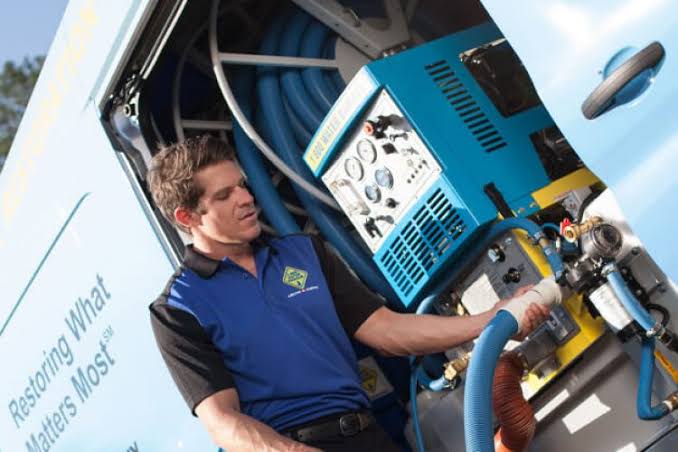
Best Water Remediation Company in Lakewood WA Explained
Floodtek provides reliable water restoration services in Lakewood, WA, helping homeowners recover from water damage caused by leaks, flooding, or burst pipes. The service focuses on fast response, moisture removal, and complete structural drying to protect properties from long-term damage and mold growth.
A sudden pipe burst or hidden roof leak can shift a home’s condition within hours, especially in Lakewood’s damp seasonal weather patterns. Homeowners searching for a professional water remediation company in Lakewood, WA are usually dealing with moisture spread that has already moved beyond surface damage. The first 24–48 hours often determine whether materials can be saved or must be replaced. Floodtek works in these conditions where timing, moisture tracking, and structural drying decisions shape the outcome more than visible cleanup alone.
Trusted Water Remediation Company in Lakewood WA services are not limited to pumping out water. The real work starts after extraction, when moisture meters reveal how deeply water has entered framing, insulation, and subfloors. Many homeowners underestimate how quickly hidden saturation can trigger mold growth behind walls and under flooring.
Moisture Behavior and Structural Impact Patterns in Lakewood Homes
Water intrusion in Lakewood properties often spreads through layered building materials rather than staying localized. Crawl spaces and older wooden subfloors absorb moisture differently compared to newer concrete-based foundations.
One field observation shows that two homes with identical leaks can require completely different drying timelines depending on ventilation and insulation density Trusted Water Remediation Company in Lakewood WA services. The mechanism behind effective remediation lies in understanding vapor movement rather than just visible water removal.
A key insight is that surface dryness can be misleading if internal humidity remains trapped inside wall cavities.
Common Drying Errors and Delayed Response Consequences
A frequent mistake is restarting normal home use too quickly after visible water is removed. This creates trapped moisture pockets that later lead to odor and mold development.
A mid-sized residential case involved a basement leak where initial drying was limited to surface-level fans. Moisture readings later showed saturation behind drywall, requiring full section removal and extended treatment. This reflects how Affordable Water Remediation Experts in Lakewood WA approaches often rely on deeper diagnostic steps rather than visual checks alone.
The core issue is delayed detection of hidden moisture pathways, which increases restoration complexity.
Equipment Selection and Moisture Mapping Decisions
Choosing the right drying strategy depends on accurate mapping rather than uniform equipment placement. Infrared imaging and hygrometer readings help identify uneven saturation zones.
The reasoning behind this approach is simple: moisture does not distribute evenly, so airflow must be targeted instead of generalized. This prevents over-drying in some areas while others remain affected.
An important insight is that controlled drying reduces material distortion, especially in engineered wood and drywall systems.
Field Observations From Active Restoration Environments
In active restoration work, one repeated observation is that air movement patterns inside a room significantly influence drying time more than equipment quantity.
Another practical lesson came from a situation where reducing airflow speed improved evaporation efficiency instead of increasing it. This shifted standard approach toward balanced humidity control rather than aggressive ventilation.
A common mistake seen in early-stage projects is ignoring HVAC system involvement, which can redistribute moisture across unaffected rooms.
Floodtek applies these observations during assessment to reduce secondary damage risks during the drying cycle.
Long-Term Property Stability After Water Exposure Events
Long-term stability depends on whether moisture pathways were fully interrupted during remediation. Residual humidity often becomes the trigger for recurring issues weeks after the initial event.
An important insight is that material recovery is not only about drying but also about restoring equilibrium between temperature and humidity inside structural layers.
Expert Water Damage Remediation in Lakewood WA Homes typically focuses on this balance to prevent delayed deterioration rather than only addressing visible damage.
Case Study
A mid-sized residential property experienced a kitchen pipe burst that affected adjacent flooring and cabinetry. Initial cleanup removed surface water, but humidity levels remained elevated in subfloor layers. water restoration services The response team adjusted the drying plan after detecting uneven moisture distribution behind base cabinets.
Airflow direction and dehumidifier placement were modified to target hidden zones. Within several days, moisture readings stabilized across all affected areas, preventing full floor replacement.
FAQs
Why is fast response important in water remediation in Lakewood WA?
Speed determines how far water spreads into structural materials. Within hours, drywall, insulation, and wood begin absorbing moisture, which increases restoration complexity. Early intervention by a professional water remediation company in Lakewood, WA helps limit hidden damage and reduces the likelihood of mold formation in concealed spaces.
How do experts detect hidden moisture after visible water is removed?
Technicians use moisture meters, thermal imaging, and humidity sensors to map water migration inside walls and floors. These tools identify saturation zones that are not visible on the surface. Trusted Water Remediation Experts in Lakewood WA rely on this data to design targeted drying strategies instead of uniform air movement.
Can water-damaged materials always be restored?
Not all materials respond the same way to water exposure. Solid wood may be recoverable depending on exposure time, while insulation and drywall often require removal if saturation is deep. Decisions depend on structural integrity, contamination risk, and moisture retention levels measured during assessment.
What causes lingering odors after water damage cleanup?
Odors usually come from trapped moisture or microbial growth inside hidden cavities. Even if surfaces are dry, moisture behind walls can continue affecting air quality. Expert Water Damage Remediation in Lakewood WA Homes addresses this by targeting internal drying rather than surface-level treatment.